DMT® Technology
The Most Precise DED Technology
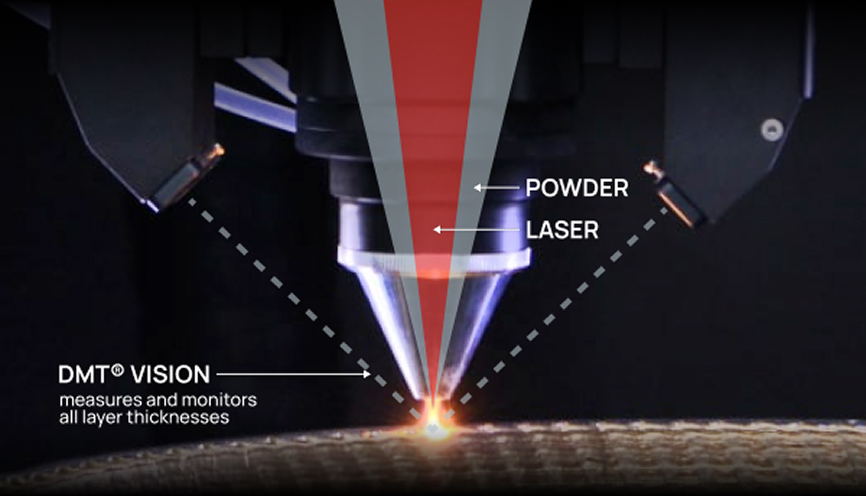
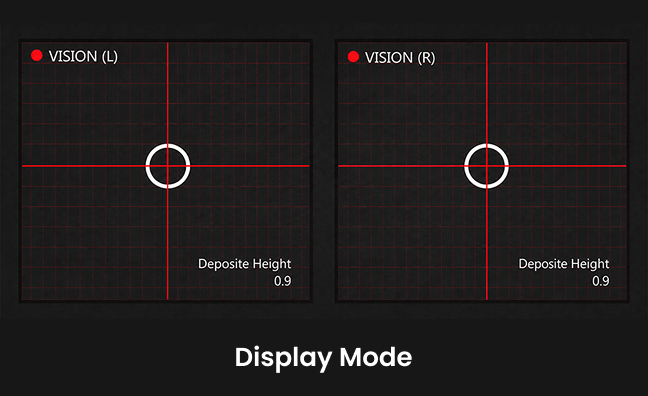
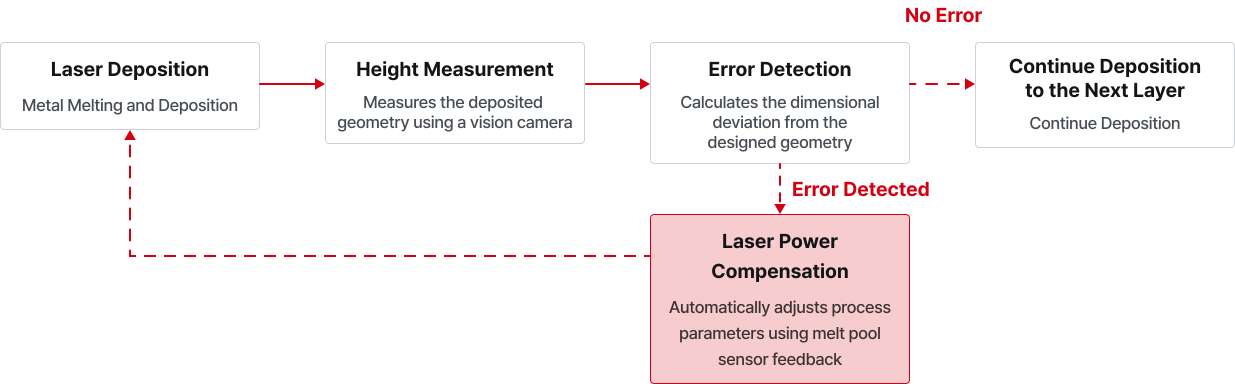
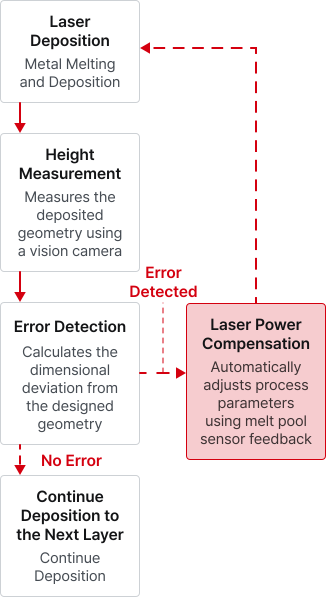
DMT® stands for Direct Metal Tooling, developed by InssTek and classified as a Directed Energy Deposition (DED) technology under ASTM standards. Using two vision cameras, DMT technology analyzes and controls the melt pool height in real time, enabling stable deposition quality and precise process control.
| Category | Conventional DED (Without Closed-Loop Control) | InssTek DMT® (With Closed-Loop Control) |
|---|---|---|
| Control Method | Simple deposition based on preset parameters | Real-time melt pool monitoring with a vision camera sensor & automatic laser power adjustment |
| Deposition Results | Dimensional deviations and uneven surfaces due to heat accumulation and cumulative errors | 100% conformity to specified drawing dimensions and precise edge formation |
| Comparison Images | 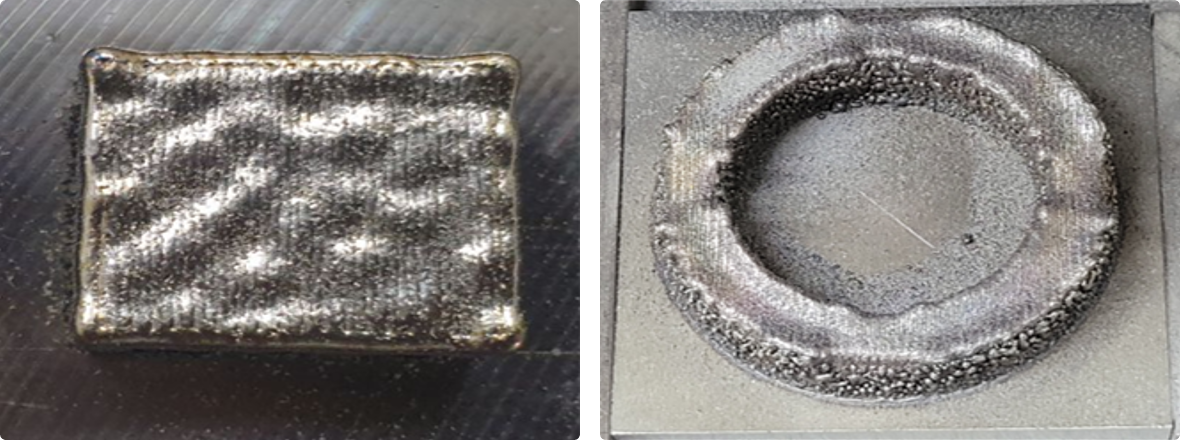 Uneven top surface & distorted inner and outer ring dimensions Uneven top surface & distorted inner and outer ring dimensions |
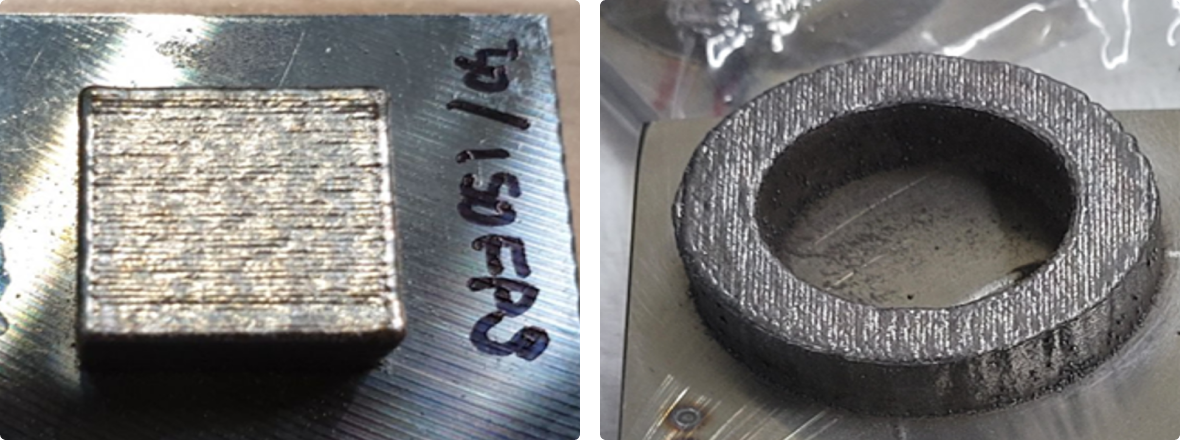 Flat, uniform top surface & smooth, dimensionally accurate ring Flat, uniform top surface & smooth, dimensionally accurate ring |
Materials Proven with DMT® Technology
Metals and alloys successfully processed and optimized using InssTek’s DMT® technology. Our material portfolio continues to expand through ongoing research on new alloys and advanced material systems.
 Steel
Steel
- P20
- P21
- H13
 Stainless Steel
- SS304L
- SS316L
- SS420J2
- SDSS 2507
 Titanium
- CP Ti (Gd2)
- Ti-6Al-4V (Gd5)
- Ti-6Al-4V (Gd23)
 Nickel
- Inconel 600
- Inconel 625
- Inconel 690
- Inconel 713
- Inconel 718
- Hastelloy 22
- Hastelloy 276
- Nimonic 75
- Invar 36
 Cobalt
- CoCr
- Stellite 6
- Stellite 21
- Stellite 25
 Copper
- Cu-Sn
- Al-bronze
 Niobium
- C-103
 and others
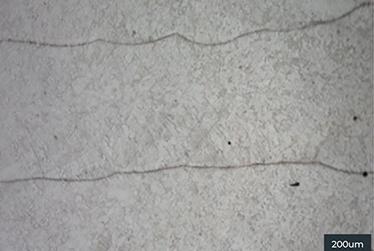
- Tensile Strength
575 MPa
- Yield Strength
450 MPa
- Elongation
36%
- Hardness
182 Hv
The result is after printing without heat treatment applied.
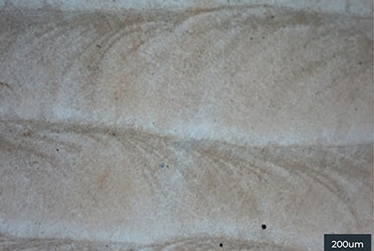
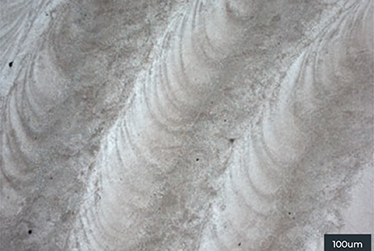
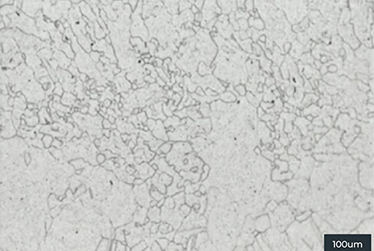
- Tensile Strength
1013 MPa
- Yield Strength
670 MPa
- Elongation
32%
- Hardness
252 Hv
The result is after printing without heat treatment applied.
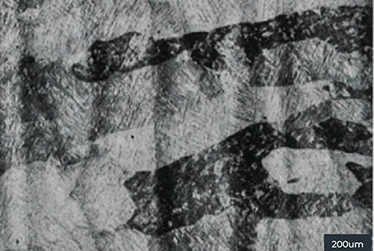
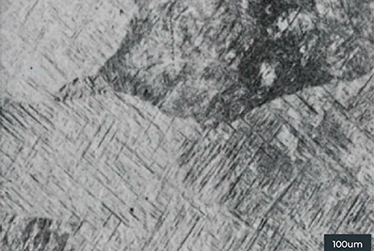
- Tensile Strength
1141 MPa
- Yield Strength
1036 MPa
- Elongation
7%
- Hardness
38.5 HRC
The result is after printing without heat treatment applied.
LFM Series (Laser Function Module)
Compact Optic and Size-Changeable Beam
Core AM-Module Technology
Compact Optical System with Variable Beam Sizes
The AM-Module is InssTek's core DED platform that integrates optical modules, real-time monitoring, and beam control technologies. Various beam sizes up to 3× are available by replacing the optical cartridge (LFM-1) or installing the automatic zoom system (LFM-2). This modular architecture provides optimized performance across a wide range of materials and process conditions.
LFM-1
4 different selectable cartridges that can be easily changed
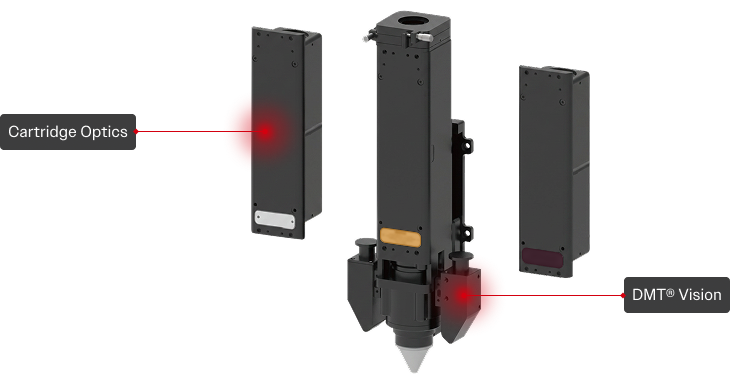
- Cartridge Optics
Our equipment has a cartridge-type optical module for laser. InssTek provides various modules according to the required laser diameter (SDM800, SDM1200, SDM1600, SDM2400). The laser beam diameter determines the print thickness and speed. Users can easily replace the module types installed in the MX-Fab according to their printing requirements.
- DMT® Vision
The key to high-precision 3D metal printing is the precise fine-tuning of the layer thickness. Our DMT technology uses an in-house developed closed-loop feedback control system that measures and monitors all layer thicknesses affecting parameters during the printing process.
LFM-2
New Technology Automatic Zoom Optics
Automatic Zoom Optics type AM-Module is the key solution to improve process efficiency and deposition quality. Since the lens magnification can be controlled with software, it is possible to change the lens magnification value during deposition.
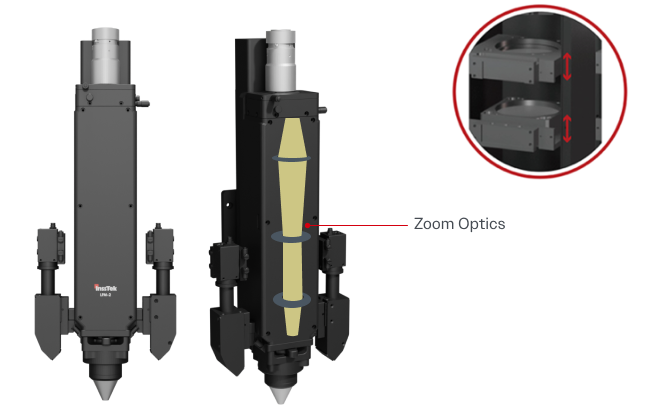
LFM Optic Technology
InssTek's LFM Optic Technology can change the laser beam size by adjusting the position of the lens. Through this, the manufacturing speed and surface roughness can be adjusted.
| Type | Beam Size (µm) | Build Speed (cm³/h) | Layer Height (µm) |
|---|---|---|---|
| SDM 800 | 800 | 5.8 | 250 |
| SDM 1200 | 1200 | 16.4 | 450 |
| SDM 1600 | 1600 | 27.4 | 600 |
| SDM 2400 | 2400 | 66.6 | 900 |
- SDM 800
800
- SDM 1200
1200
- SDM 1600
1600
- SDM 2400
2400
- SDM 800
5.8
- SDM 1200
16.4
- SDM 1600
27.4
- SDM 2400
66.6
- SDM 800
250
- SDM 1200
450
- SDM 1600
600
- SDM 2400
900
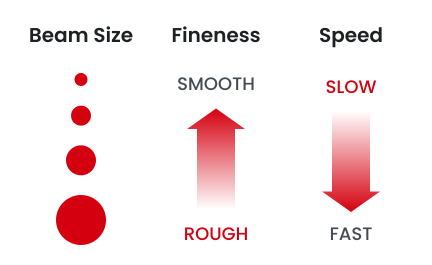
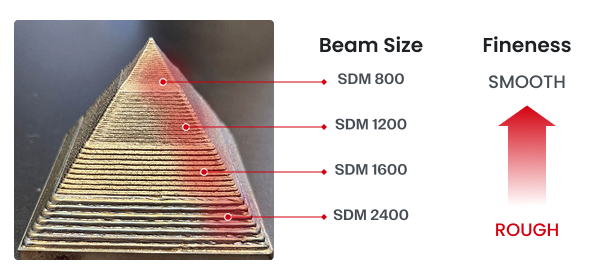
By adjusting the beam size, it is possible to print a rough or smooth structure for each part within one component without replacing the nozzle
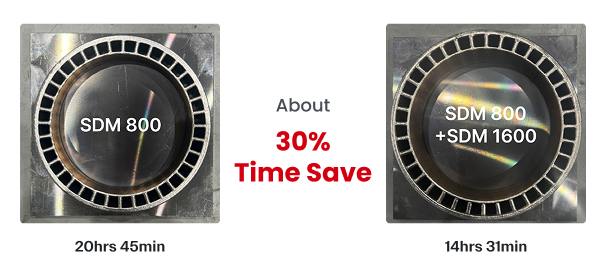
When manufacturing same shape components, deposition time can be saved by applying different beam sizes to each part.
Discover how InssTek's DMT® technology can optimize your manufacturing process and material development. Contact our experts to discuss the right solution for your application.